Pseudoacacia
Managing and interpreting invasive trees as natural and/or cultural heritage in post-industrial landscapes.
An experimental film.
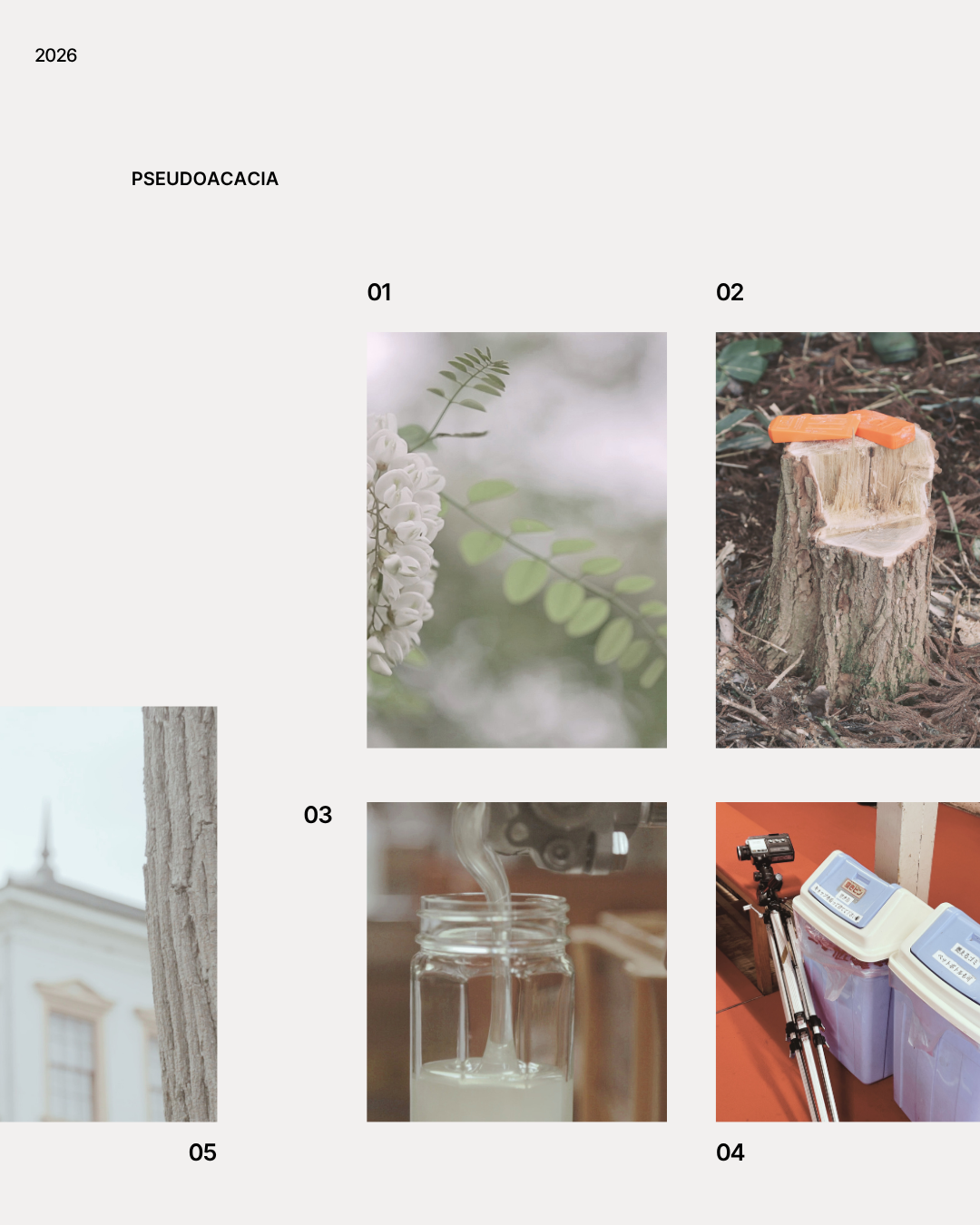
Pseudoacacia is a collaborative experimental research film exploring community, place, and memory in a former mining region of Akita Prefecture, northern Japan. Centered on the invasive False acacia tree (Robinia pseudoacacia), the film examines how a species introduced to restore a landscape damaged by mining has come to shape local identities, livelihoods, and relationships with the environment.
Originally introduced to restore land damaged by mining in Kosaka, the False acacia has become part of everyday life. It is a source of honey, firewood, celebration, debate, and memory. By bringing together many different perspectives, the film explores how one tree can be understood, valued, celebrated, and contested in different ways.
Blending experimental filmmaking with heritage research, Pseudoacacia invites audiences to reflect on the landscapes around them and asks: When does an introduced tree become cultural heritage, and who gets to decide?
Currently in production.
When I heard of the Acacia Festival, I imagined a festival of trees.
Later, I learned there were no trees.
Then I learned there had once been trees.
Then I learned that what people call an acacia here is not really an acacia at all.